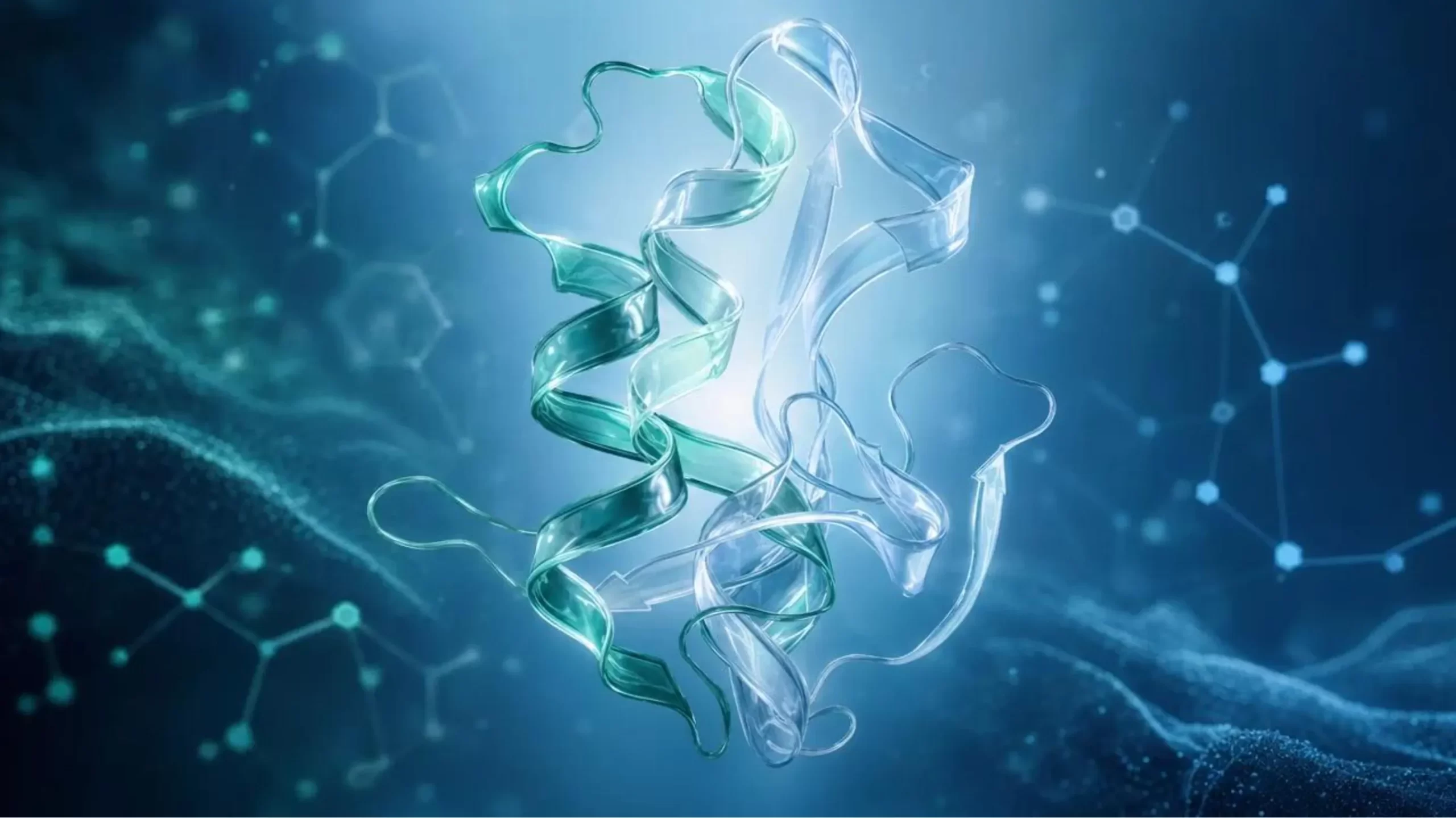
Molecular Form
An abstract peptide-like ribbon structure against a deep-blue molecular backdrop.
Explore visual perspectives on molecular structures, laboratory work, and the methods that inform peptide research.
An abstract peptide-like ribbon structure against a deep-blue molecular backdrop.

A close view of a scientist working with pipetting equipment in a research laboratory.

A glowing chain-and-helix visualization illustrating the visual language of molecular research.
Gallery visuals illustrate scientific themes; they do not independently verify laboratory methods, product availability, purity, or testing.

Scientific imagery can introduce complex subjects by giving readers a visual starting point. Ribbon-like molecular forms, laboratory instruments, and illuminated molecular graphics suggest different aspects of research. The images are useful for illustration, but their meaning depends on the accompanying explanation.
A molecular visualization may depict a conceptual shape or relationship rather than the structure of a tested sample. Similarly, a laboratory photograph can show a kind of activity without establishing that a named organization performed a particular test or produced a particular outcome.
When viewing a scientific gallery, it helps to distinguish the subject shown from the claim a reader might be tempted to infer. An image of pipetting equipment suggests laboratory handling; it does not demonstrate the condition of a material, the accuracy of a method, or the existence of a batch-specific report.
The gallery is therefore best used as a visual map to broader research topics. Readers interested in molecules can explore structure and sequence, while those drawn to laboratory scenes can examine workflow and analytical context. Written methods and supporting records remain necessary when specific evidence is the goal.