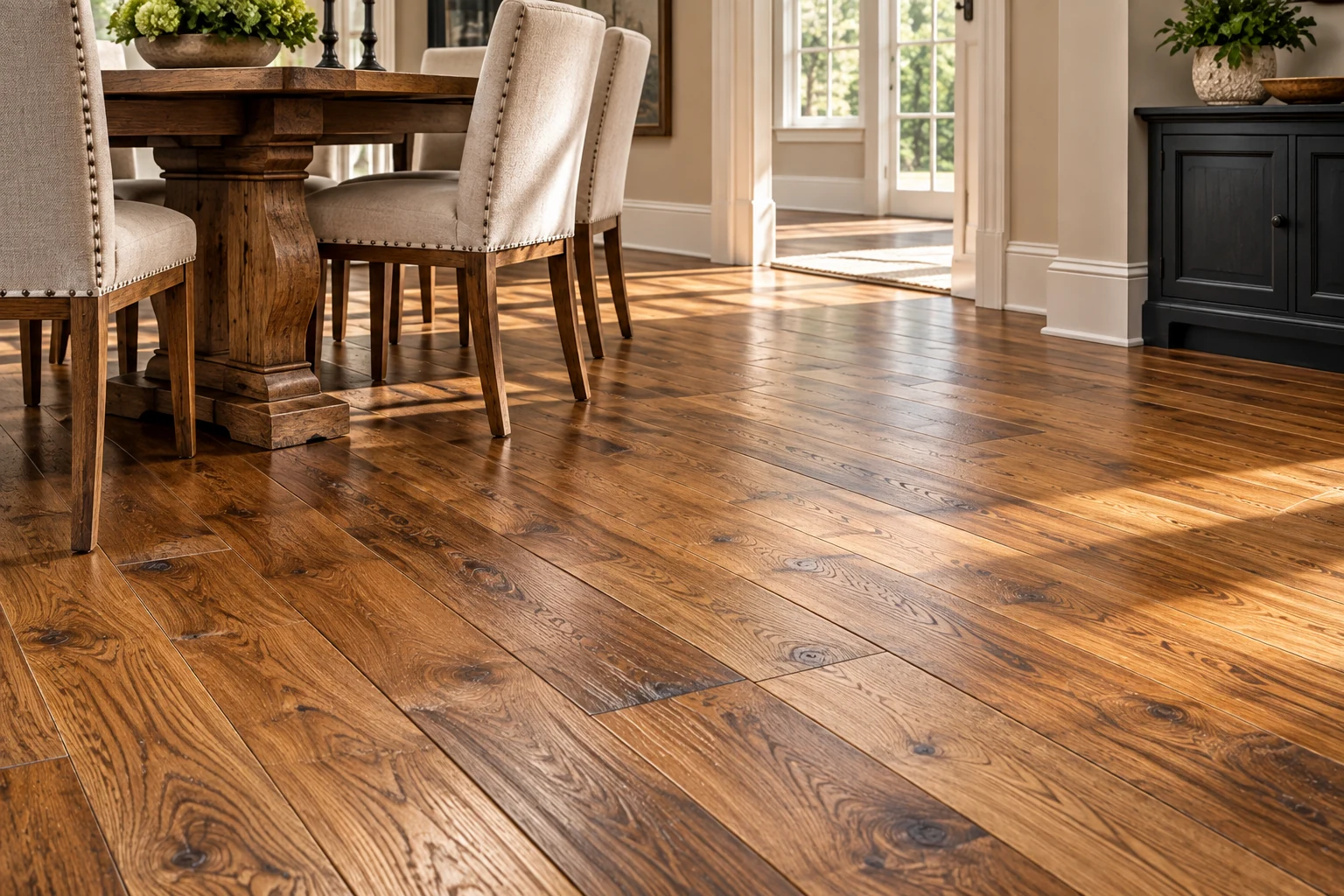
Hardwood Flooring
Hardwood brings natural variation, warmth, and long-term visual character to a room. The right choice depends on the look you want, the space itself, and how the floor will be used.
- Room dimensions and layout considerations
- Wood tone, plank character, and visual direction
- Everyday use, care, and transition considerations
Choosing Hardwood for Character, Layout, and Everyday Use
Hardwood has a visual quality that comes from variation rather than perfect uniformity. Grain, knots, board color, and the way natural light moves across a floor can make one room feel very different from another. When comparing samples, consider the range of variation you are comfortable seeing across an entire installation, not only the appearance of one board.
Plank dimensions influence the room as well. Wider boards can emphasize longer lines and larger grain patterns, while narrower boards create a different rhythm. The direction of installation, the position of doors, and the location of adjacent floors can also affect the visual outcome and the transitions required.
Look Beyond the Sample Board
Hardwood choices involve more than the surface look. Product construction, finish, manufacturer guidance, and the conditions beneath the floor influence where a particular product may be appropriate. Solid and engineered hardwood products can differ in their installation requirements, so comparisons should be made using the specifications for the exact flooring under consideration.
Think about how the room will be used and maintained. Furniture movement, tracked-in grit, pets, spills, and changing indoor conditions are practical factors to discuss. Surface finishes and protective habits can affect how a floor ages, but no wood floor is immune to marks or changes caused by everyday use.
Consider Conditions Before Installation
Moisture and environmental conditions deserve specific attention. Wood responds to changes in moisture, and installation guidance may include requirements for acclimation, subfloor readings, and indoor conditions. The correct approach depends on the product, manufacturer instructions, and what is found in the home.
Before choosing a final tone, view hardwood samples next to cabinetry, trim, and any connecting floors. Ask about transitions, thresholds, stair details, and care recommendations for the exact product. A well-planned selection accounts for appearance and the practical realities of the room together.